Quote
Subtotal:
$0
| Capacity: | |
|---|---|
| Closure Options: | |
| Quantity: | |
Whisky Bottle, Vodka Bottle, Rum Bottle, Tequila Bottle, Gin Bottle
50ml-375ml
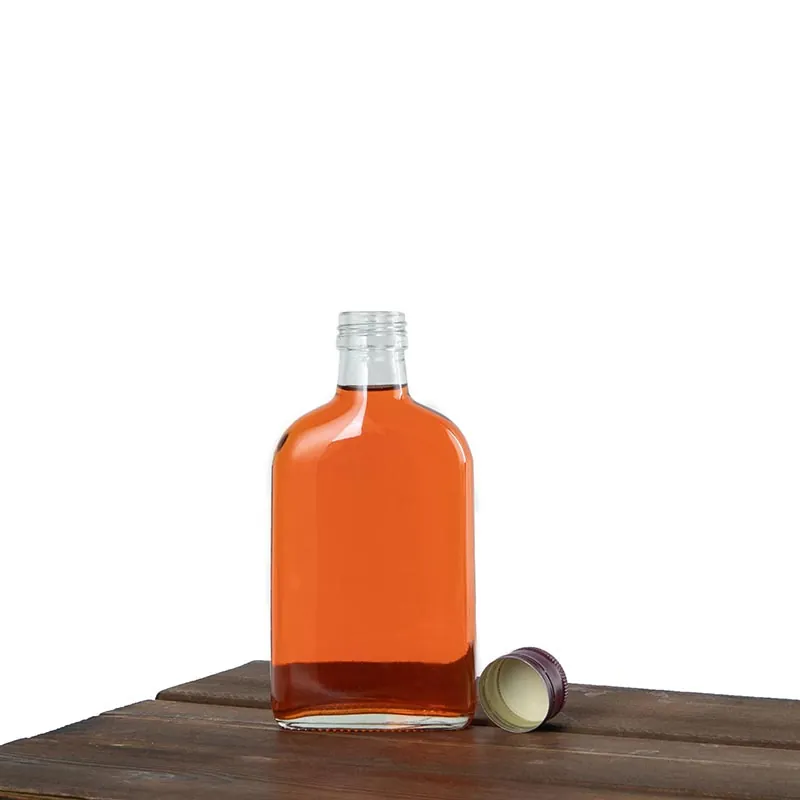
Flat
Screw finish
Flint glass
Clear
In stock
Bottle Style |
Flat Flask |
Neck Finish |
Screw Top |
Capacity |
100ml, 200ml |
MOQ |
2,000,000pcs |
Customized Bottle |
Processing Decorations Supported |
Application Industry |
Liquor & Beverage |

Click to see more styles of flat glass flask >>
Flat Glass Flask Bottle
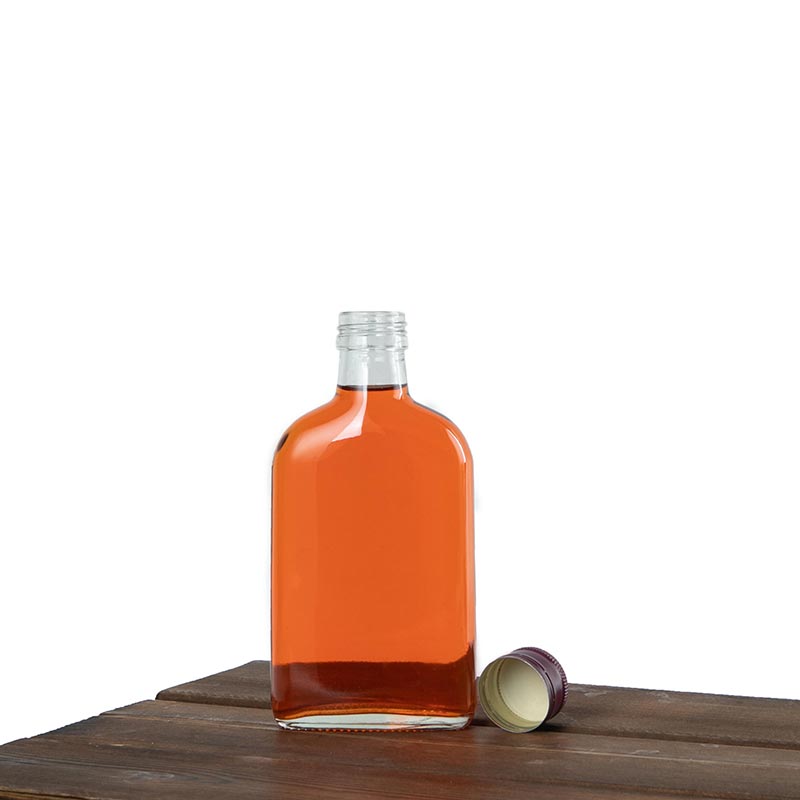
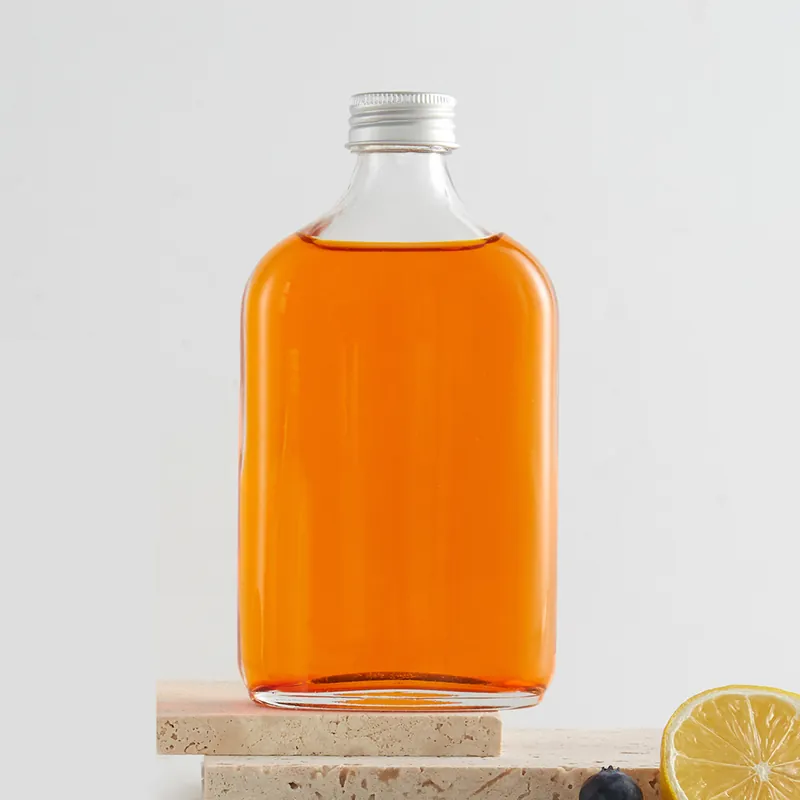
A practical glass container built for brands that need shelf presence without the bulk. The flat profile sits stable, stores tight, and ships lean.
Build & Material
Crafted from soda-lime flint glass with consistent wall thickness. Lead-free and food-grade compliant. The surface takes labels, screen prints, and frost treatments without adhesion issues.
Profile
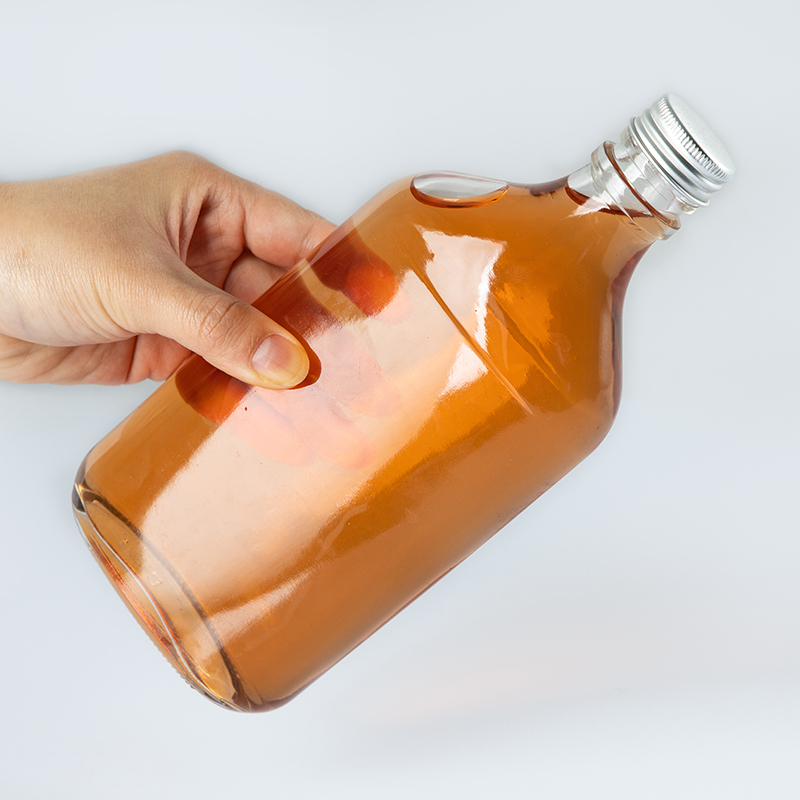
The rectangular body with rounded shoulders gives you a broad front panel for branding while keeping the depth minimal. This matters when box dimensions and pallet space directly affect your landed cost. The curved back rests naturally in hand.
Neck & Closure
Standard continuous thread finish. Compatible with tamper-evident screw caps and polycone liners. Neck diameter and finish spec available on request for closure matching.
Base
Thickened glass at the foot for stability on conveyor lines and retail shelves. Anti-slip contact surface.
Typical Fills
Spirits, liqueurs, infused oils, cocktail syrups, herbal tinctures, and high-viscosity sauces. Also used for aftershave and hair oil in personal care.
Sizes
100ml / 200ml / 350ml / 500ml (other volumes available on tooling discussion)
MOQ
Stock sizes: 5,000 units. Custom tooled: 20,000 units (varies by spec).
| Elevate your product with premium glass packaging. Contact our sales team to request a free sample, discuss customization, or get a quote. Email:max@huihepackaging.com |
Q: Will this bottle work with my existing capping equipment?
A: We provide the neck finish spec (T-dimension, thread profile, and height) before you order. If you run a 28mm Kerr-compatible closure now, this threads directly. For other lines, send us your cap sample—we'll verify fit and torque values.
Q: What is the actual label panel size?
A: The flat front panel width and height vary by capacity. We send a technical drawing with every quote. If you have a label size already locked, tell us upfront and we'll flag any wrap or adhesion constraints before production.
Q: Can I get samples before committing to MOQ?
A: Yes. Stock samples ship within 2 business days, freight collect. Custom samples take 7–15 days depending on decoration complexity. Sample cost is credited against your first bulk order.
Q: What is the lead time for a 10,000-unit order?
A: 20–30 days for stock shapes with standard decoration. Custom mold orders run 45–60 days after drawing approval. We confirm capacity before quoting so the date we give you is the date we hit.
Q: How are these packed for ocean freight?
A: Bottles are layered in corrugated dividers, then cased in 5-ply export cartons. Pallet configuration is optimized for your container—usually 20–24 cartons per layer, depending on bottle size. We provide a packing diagram with the pro forma invoice.
Q: Do you provide certificates for food contact or alcohol packaging compliance?
A: We issue FDA and LFGB compliance declarations with shipment. If your market requires TTB distinctive bottle approval or specific state-level packaging regulation review, we submit the technical package on your behalf. Lead time for regulatory filings is separate from production.
Q: What is the breakage rate in transit?
A: Under 0.3% for properly packed FCL shipments. We use load-bearing cartons and edge protectors. If you receive higher damage, we replace the units and review the packing spec with your forwarder.
Q: Can you match a specific Pantone for spray color?
A: Within 2 Delta E for solid colors. Metallic and translucent finishes have wider variance—we send a production swatch for sign-off before the run.
Q: Is the glass recycled content?
A: The material is recyclable and we use cullet in the batch. Post-consumer recycled content percentage varies by run; specify if your brand marketing requires a verified percentage and we adjust the melt accordingly.
Q: What happens if my order arrives and the neck finish is off-spec?
A: We keep pre-production samples and inspection records by lot number. If the shipment deviates from the agreed spec, we accept return and rerun at our cost. This is standard in our terms; no separate quality agreement needed.