Quote
Subtotal: $0


Every spirits category has its own packaging logic. Bourbon ages in charred barrels but sits on retail shelves in amber glass — because UV degrades the color compounds that took years to develop. Gin brands fight for shelf space in clear or dark green glass — because those 10 seconds of shopper attention reward distinctive shapes. Tequila bottles going to the US market get scrutinized by the TTB before a label is approved.
The glass bottle isn't just a container. For spirits brands, it's the first argument you make to a buyer.
HUIHE has manufactured glass bottles for distilleries, spirits brands, importers, and private label operators since 2008. Three production bases. Nine furnaces. Four in-house decoration facilities. Annual capacity: 250,000 tons. We ship to over 60 countries.
This page covers our full spirits bottle range — what we make, how we make it, and which format fits which spirit category. Sub-category pages go deeper on each spirit type.
| In-stock MOQ | 6,000 units |
| Custom MOQ | 10,000 units |
| Stock lead time | 7 business days |
| Custom production | ~45 days |
| Sample lead time | ~10 days |
| Spirits categories | Whiskey · Vodka · Gin · Tequila · Mezcal · Rum · Brandy · Cognac |
| Size range | 50ml – 1.75L |
| Certifications | ISO · SGS · FSC · RoHS · CE · REACH · MSDS |
| Export markets | 60+ countries — North America, Europe, Australia, Southeast Asia |

Amber glass is standard for most whiskey and bourbon — it provides measurable UV protection for light-sensitive congeners, not just aesthetic preference. Heavy base designs are common for premium and super-premium tier products. Closure formats are predominantly bar-top (T-top with natural or synthetic cork shank) for craft and premium positioning.
→ Whiskey Glass Bottles — full specifications

Vodka packaging centers on clarity — crystal white glass with minimal iron content, high-speed filling line compatibility, and ROPP or CT closure fit. Tall, narrow formats dominate the category; unusual shapes are increasingly common for premium brand differentiation. This is the highest-volume spirits category in production globally, and the technical demands are largely around production-line consistency.
→ Vodka Glass Bottles — full specifications

Gin has seen more bottle shape innovation in the past decade than almost any other spirits category. The craft gin explosion has pushed brands toward distinctive forms — irregular geometries, faceted panels, heavy bases — as the primary brand identity tool. We handle both stock formats and full custom mold development for new brand launches.
→ Gin Glass Bottles — full specifications

The North American tequila and mezcal market involves specific import compliance requirements — TTB label approval in the US, COFEPRIS standards in Mexico — that affect how bottle specifications are documented and submitted. Bottle formats range from traditional agave-inspired shapes to contemporary premium designs. We have export experience to US and Canadian accounts.
→ Tequila & Mezcal Glass Bottles — full specifications

Rum's packaging ranges from commodity production bottles to premium aged-rum vessels competing on shelf with Cognac. The category covers a wider spread of price points than most spirits, which means both stock-format volume orders and high-specification custom projects. Dark glass is common for aged expressions.
→ Rum Glass Bottles — full specifications

Cognac-style packaging typically involves round-shoulder formats, heavy glass weight, and natural cork closures — similar conventions to aged whiskey, but with distinct bottle geometries associated with French production traditions. Brandy bottles for Asian export markets often carry different aesthetic expectations.
→ Brandy & Cognac Glass Bottles — full specifications
Spirits glass shares a set of technical requirements that distinguish it from standard beverage glass. Buyers specifying bottles for spirits production need these confirmed before ordering.

The standard production wall thickness for a 750ml spirits bottle sits at approximately 3.5–4mm on the body. Premium-tier bottles are commonly specified at 5–6mm, with base thickness up to 8–10mm for heavy-base designs. Glass weight directly influences perceived quality — a 750ml bottle that weighs 450g versus 600g reads differently to the end consumer, even with identical labeling.
Weight specification is determined during the drawing stage and held to tolerances across the production run. Buyers who have experienced weight inconsistency from other suppliers should ask for the weight tolerance spec in writing before ordering.

Custom color matching is available for exclusive brand glass projects.
Spirits bottles are not interchangeable with standard beverage bottles in terms of neck finish. The three primary closure systems used in spirits packaging require different neck geometries:
Bar-top (T-top) closures seal by compression of a cork or synthetic shank inside the bore. Bore diameter (typically 18.5mm or 21.5mm) and bore surface quality are the critical variables. This is the standard closure format for premium and craft spirits.
ROPP closures require a specific bead and support ring geometry on the bottle neck — the aluminum shell is rolled onto the bottle during capping, forming threads in-situ. ROPP finishes are not interchangeable with CT screw thread finishes even at the same diameter. If your filling line runs ROPP heads, confirm the finish spec from your bottle drawing before ordering.
CT screw cap finishes (GPI/GCMI standards) accept pre-threaded aluminum or plastic caps. Less common in premium spirits; used for mid-volume blended products and certain Asian market SKUs.
Closure type and neck finish are confirmed during sample approval for all orders.
All decoration and surface finishing at HUIHE is handled internally across four dedicated deep-processing facilities. We do not subcontract decoration work.
This is worth understanding operationally: subcontract decoration creates a handoff where your bottle leaves our custody for finishing by a third party. That introduces timeline variability, quantity loss, and QC responsibility gaps. Our vertical integration means one set of drawings, one QC team, and one production schedule from raw glass to finished, decorated bottle.

— up to 8 colors, fired for permanence, suitable for regulatory text and complex graphics

— frosted textures, either full-body or patterned mask

— full-body color or gradient, 360° coverage for brand-colored glass

— gold, silver, bronze base coats or accent panels

— high-definition imagery fired onto glass surface at temperatures that fuse the pigment permanently

— raised design elements built directly into the glass; no surface application, permanent by design

— OPP, paper, and shrink sleeve label application for brands supplying own label stock

Spirits bottle quality failures at the filling line are expensive — not just the lost bottles, but line downtime and rebottling. The QC process that prevents those failures happens at the factory, not at goods receipt.
HUIHE runs a 16-person export QC team operating independently of production. Their process:
Full visual inspection — every bottle reviewed, not sampled. Checks for seeds, stones, checks, blisters, and dimensional defects.
Dimensional inspection — bore diameter, finish OD, height, and capacity tolerance checked against drawing spec. Bore diameter tolerance is particularly critical for bar-top cork and ROPP applications — a 0.3mm out-of-tolerance bore will cause closure problems on the filling line.
Weight consistency — tracked per batch. Buyers who run automated filling lines often spec weight tolerances tighter than standard production; this can be confirmed in the drawing spec.
Internal pressure testing — relevant for any sparkling spirits application or when specifying heavy-wall formats.
Laboratory sampling — chemical compliance testing aligned with FDA and EU food contact material standards. Third-party SGS test reports available on request.

if you've been buying from a larger factory that won't take orders below 30,000 units, our 6,000-unit stock MOQ and 10,000-unit custom MOQ are designed for this gap. You get factory-direct pricing and direct QC documentation without the volume commitment that large factories require.
custom mold development is part of our regular workflow, not an exception. We handle the full sequence from drawing to approved sample to production. Design-phase consultation on glass engineering constraints (what shapes cause production problems, what wall thicknesses are unrealistic at certain capacities) is available early in the project.
standing order arrangements with quarterly scheduling are available for buyers managing volume across multiple SKUs. We maintain production records by account so that repeat orders match previous shipments on weight, color, and finish.
if you're running 70+ decoration SKUs per month across multiple brand accounts, you need a supplier with the decoration throughput to match. Our in-house facilities handle that volume without the artwork-to-production delays common in subcontract decoration setups.
Do spirits bottle shapes affect filling line performance?
Yes, in two specific ways. First, bottle stability on the conveyor — rounded bases and high center-of-gravity designs increase tip-over rates on high-speed lines. This is an engineering parameter, not an aesthetic one, and should be reviewed during sample trials. Second, label application — label wrap radius needs to match your labeler's head configuration. For square and faceted bottles, flat-panel label placement eliminates that variable, but the panel dimensions need to be specified at the drawing stage.
Can I order multiple spirits bottle formats in one shipment?
What is the tooling cost for a custom spirits bottle mold?
How do you handle first-order risk for new buyers?
What is your reject rate on export shipments?
Do you offer any filling and closure coordination support?
Mob:+86-15905200547
E-mail:max@huihepackaging.com
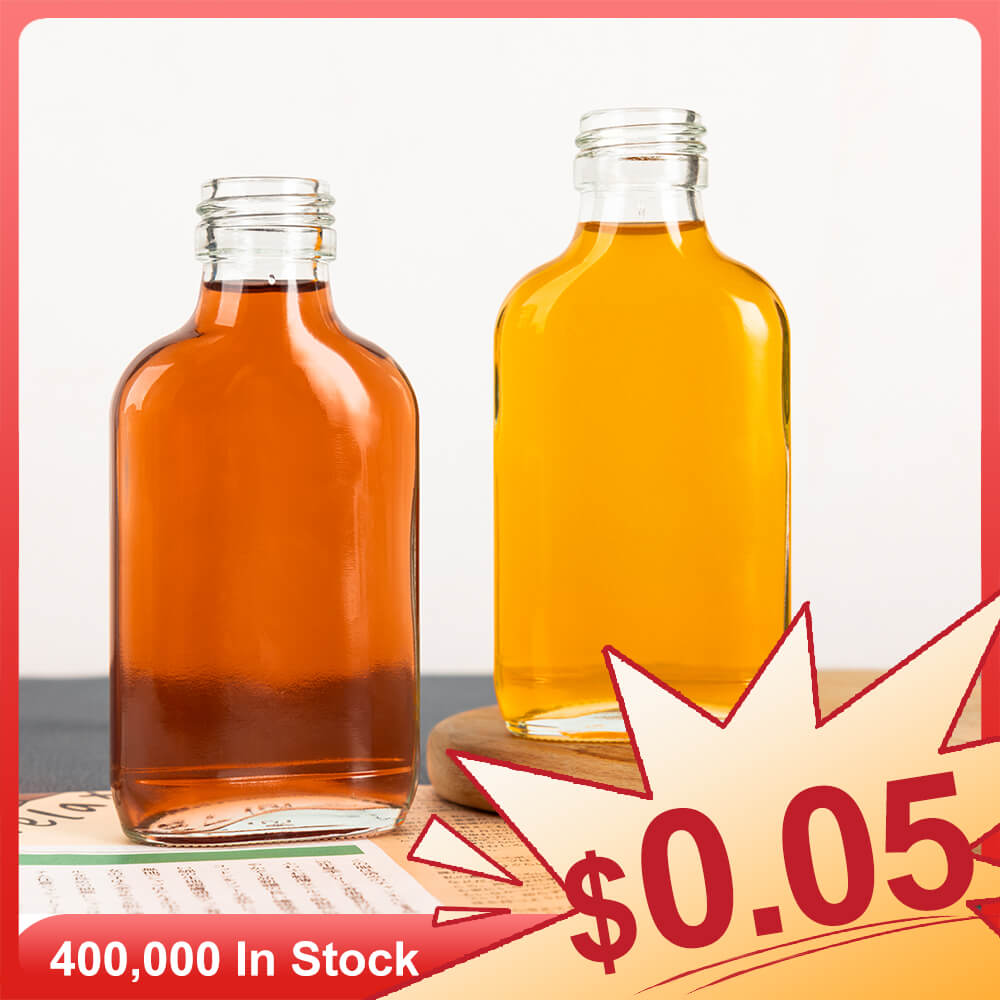
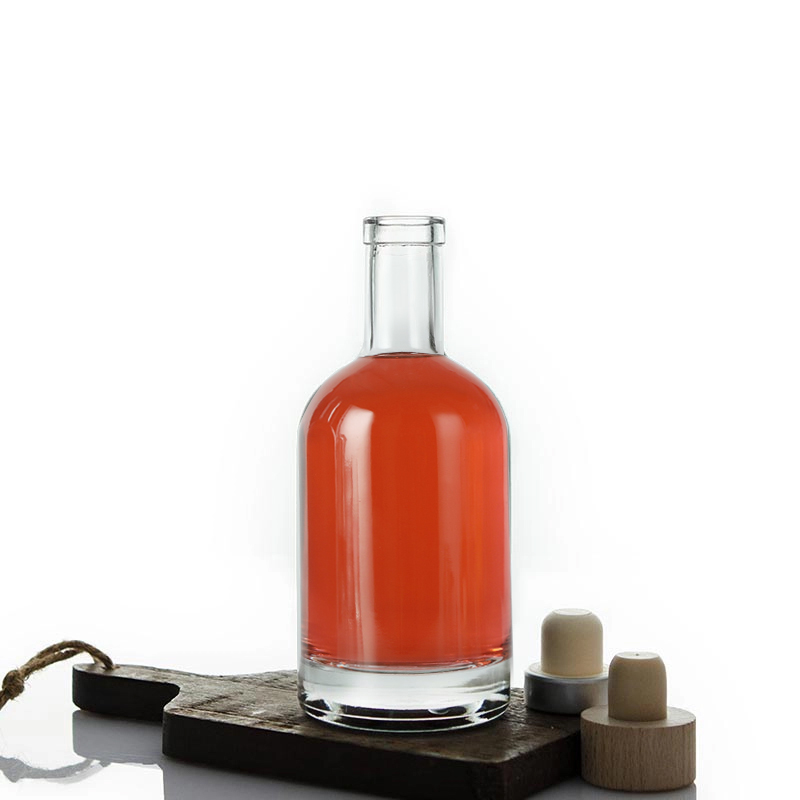
Looking for premium spirit bottles without the heavy upfront costs? We've got you covered with our classic in-stock collection, featuring globally recognized, timeless designs that fit any premium liquor brand. You’ll enjoy exceptional glass clarity and a flawless finish that far surpasses our competitors, all while saving 100% on tooling costs with zero mold fees. With a flexible MOQ of just 6,000 pieces and immediate shipment ready to significantly cut your lead time, upgrading your packaging has never been easier or faster.
Ready to elevate your brand? Let's talk!